
Bronx Ladder Company Coverage by Decade

Joined
Sep 7, 2020
Messages
2,686
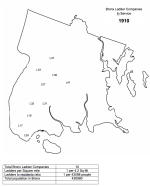
In 1910, There were 10 Ladder companies organized in the Bronx. Almost all were in the western half (geographical) of The Bronx. This is where the population growth was. The South Bronx (Melrose, Mott Haven, Hunts Point, Morrisania) and the neighborhoods that grew around the subways (Els). Third Avenue and Westchester Avenue subway lines ferried the working class back and forth between Manhattan and The neighborhoods of The Bronx including West Farms, Fordham, University Heights, Kingsbridge and Bedford Park. Interestingly, if you look at this corridor, it would be ground zero for much of the busiest companies during the war years . The Population of The Bronx in 1910 was 430980.

Screenshot 2025-12-31 at 11.52.47 AM.png
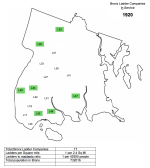
In just 10 years, the population of The Bronx had increased by approximately 300,000 people. From 1911 thru 1920 FDNY added 7 more ladder companies to The Bronx. 1913 must have been a great budget year when 6 of these ladder companies were organized.


Screenshot 2025-12-31 at 11.53.17 AM.png

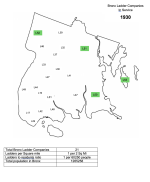
In the decade that followed, an additional 500,000 people moved into The Bronx. By 1930, FDNY had added 4 additional Ladder companies to the areas of Riverdale, and the rapidly growing East Bronx areas such as Eastchester, City Island, and Schuylerville.
1930.png

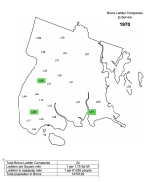
From 1928 until 1966 (38 years), no additional ladder companies were organized in The Bronx. During this period the country experienced the Great Depression and World War 2. Population growth slowed down considerable as compared to the 20's and 30's. By 1970 the great arson wave in the South Bronx was underway. The War Years. During the 60's FDNY added 3 permanent ladder companies to The Bronx: Ladders 54, 55, and 56.
1970.png

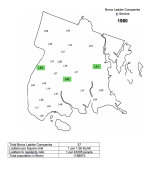
The War Years continued strongly through the 70's. There were a whole series of second sections added to existing companies including Ladders 17-2, and 27-2, tactical control units (ladder TCU 712), squads, and additional battalions implemented during the early 70's but most were gone by 1975 when the City of New York came close to bankruptcy and laid off members and closed companies. Ladder 53 on City Island was disbanded in Aug 1974 and would not be placed back in service until 12 years later in 1986. After all the dust settled, three additional ladder companies were permanently organized during the 70's: Ladders 58, 59, and 61. The organization of Ladder 61 in Co-op City would be the last time in over 50 years that new ladders were placed in The Bronx. Interestingly, by 1980, the net population of The Bronx was down to 1168972, reflecting an exodus of over 300,000 permanent residents from The Bronx.
Screenshot 2025-12-31 at 12.10.03 PM.png

Maps, tables, and Narrative by Capttomo.
 

Attachments

  • 1910.png
    1910.png
    373.1 KB · Views: 121
  • 1920.png
    1920.png
    364.6 KB · Views: 114
  • 1980.png
    1980.png
    369.9 KB · Views: 119
Last edited:
On the 1980 map 53 Truck is listed. I am pretty sure 53 was disbanded in the mid to late 70's and was not reorganized until 1985ish when Engine Company 85 was disbanded.
 
On the 1980 map 53 Truck is listed. I am pretty sure 53 was disbanded in the mid to late 70's and was not reorganized until 1985ish when Engine Company 85 was disbanded.
You are correct. 85 became 53 but I’m not sure of the date off the top of my head. I will check Mike Boucher’s data on Nyfd.com site. Thanks for the heads up. Happy New Year
 
In 1910, There were 10 Ladder companies organized in the Bronx. Almost all were in the western half (geographical) of The Bronx. This is where the population growth was. The South Bronx (Melrose, Mott Haven, Hunts Point, Morrisania) and the neighborhoods that grew around the subways (Els). Third Avenue and Westchester Avenue subway lines ferried the working class back and forth between Manhattan and The neighborhoods of The Bronx including West Farms, Fordham, University Heights, Kingsbridge and Bedford Park. Interestingly, if you look at this corridor, it would be ground zero for much of the busiest companies during the war years . The Population of The Bronx in 1910 was 430980.

View attachment 54108
In just 10 years, the population of The Bronx had increased by approximately 300,000 people. From 1911 thru 1920 FDNY added 7 more ladder companies to The Bronx. 1913 must have been a great budget year when 6 of these ladder companies were organized.

View attachment 54109

In the decade that followed, an additional 500,000 people moved into The Bronx. By 1930, FDNY had added 4 additional Ladder companies to the areas of Riverdale, and the rapidly growing East Bronx areas such as Eastchester, City Island, and Schuylerville.

View attachment 54110

From 1928 until 1966 (38 years), no additional ladder companies were organized in The Bronx. During this period the country experienced the Great Depression and World War 2. Population growth slowed down considerable as compared to the 20's and 30's. By 1970 the great arson wave in the South Bronx was underway. The War Years. During the 60's FDNY added 3 permanent ladder companies to The Bronx: Ladders 54, 55, and 56.

View attachment 54111

The War Years continued strongly through the 70's. There were a whole series of second sections added to existing companies including Ladders 17-2, and 27-2, tactical control units (ladder TCU 712), squads, and additional battalions implemented during the early 70's but most were gone by 1975 when the City of New York came close to bankruptcy and laid off members and closed companies. After all the dust settled, three additional ladder companies were permanently organized during the 70's: Ladders 58, 59, and 61. The organization of Ladder 61 in Co-op City would be the last time in over 50 years that new ladders were placed in The Bronx. Interestingly, by 1980, the net population of The Bronx was down to 1168972, reflecting an exodus of over 300,000 permanent residents from The Bronx.

View attachment 54112
Maps, tables, and Narrative by Capttomo.
Great stuff Cap.

Not to be picky (but of course it is) a few additions...

In 1910, Ladder 19 was located further south than plotted in a single house in Melrose on Forrest Avenue and 161st Street. Today it is the site of the NYCHA Forrest Housing Project. L19 moved there in 1898 from Ogden Avenue when Engine 68 was organized there.

Also in 1910, Ladder 32 was located with engine 50 on East 166th Street in Morrisania, in the same house you posted a photo of as '50s former quarters. L32 did not relocate to Engine 62 until 1928.

And while they were not separate ladder companies, Engines 45 (West Farms), 52 (Riverdale), 62 (Williamsbridge), and 69 (Woodlawn) all were operating as combination companies In 1910 with a ladder section included as part of the company.

Mike Boucher strikes again.
 
During the War Years those 24 Trucks were not enough to go around. Anyone Remember the You Tube Video Bx Dispatcher asking ( Any Units in the Bronx Available ? )

"tperez102", I DO remember that - "any units in the Bronx available".
I think a CD was produced which included that.
Hopefully it can be found and someone post it.
 
Great stuff Cap.

Not to be picky (but of course it is) a few additions...

In 1910, Ladder 19 was located further south than plotted in a single house in Melrose on Forrest Avenue and 161st Street. Today it is the site of the NYCHA Forrest Housing Project. L19 moved there in 1898 from Ogden Avenue when Engine 68 was organized there.

Also in 1910, Ladder 32 was located with engine 50 on East 166th Street in Morrisania, in the same house you posted a photo of as '50s former quarters. L32 did not relocate to Engine 62 until 1928.

And while they were not separate ladder companies, Engines 45 (West Farms), 52 (Riverdale), 62 (Williamsbridge), and 69 (Woodlawn) all were operating as combination companies In 1910 with a ladder section included as part of the company.

Mike Boucher strikes again.
Thank you 3511........yes you are correct. Good catch. I will adjust the maps momentarily. This has been a rewarding project in that it brought out many site members like you who are truly interested in the FDNY history. The result of this project has been a collaborative effort by quite a few to help me improve accuracy. Thank you to all. On a side note, we all know that I obtained this data for graphic mapping from Mike Boucher's data on NYFD.com. I am in awe of Boucher's research and painstaking efforts to complete his project. Thank you Mike for all your time and effort to produce the the original list and share it via Don Holt's ( may he continue to rest easy) website. Wishing you all a safe, happy, and healthy New Year
 
On the 1980 map 53 Truck is listed. I am pretty sure 53 was disbanded in the mid to late 70's and was not reorganized until 1985ish when Engine Company 85 was disbanded.
Thank you Elmer. you are correct. I adjusted the map accordingly. Happy New Year.
 
In 1900:
Ladder 17 (with Fuel Depot 21) - 589 East 143rd Street
Ladder 18- 84 Attorney Street
Ladder 19- 886 Forest Avenue

Ladder 17 Boundaries- Harlem River, 144th Street, Willis Avenue, 138th Street, Alexander Avenue to Harlem River.

Ladder 19 Boundaries- East River and Cabot Street, to Legget Avenue, to Dawson, or East 153rd Street, to Westchester Avenue, to St. Ann's Avenue, to East 163rd Street, to Stebbins Avenue, to Dongan Street, to Hunts Point road, to Mohawk Avenue, to Bronx River to East River.
 
"tperez102", I DO remember that - "any units in the Bronx available".
I think a CD was produced which included that.
Hopefully it can be found and someone post it.

"tperez102", I DO remember that - "any units in the Bronx available".
I think a CD was produced which included that.
Hopefully it can be found and someone post it.

Listen from 6:39
 
Back
Top