- Joined
- Nov 2, 2020
- Messages
- 1,426
1/1/37Mine also....7-1-37.

1/1/37Mine also....7-1-37.
Yes, it was Chief McGintyMy father was friends with the chief in charge, if I remember correctly, BC McGinty.View attachment 55164

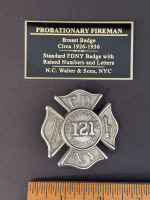
Were Probys not assigned their final badge number until they got off probation then?PROBY BADGE ....View attachment 55207
WOW!!

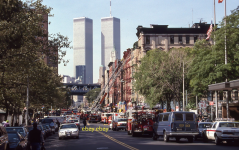
What two units are those behind Engine 4?


........and they kept pushing in even though the nozzle melted!The worst jobs were in the Old Law Tenements with the long hallway to the first bedroom off to the left or right, take out the window take a blow and continue down the hallway to the kitchen and other rooms where the fire was. Crawling down hallways was normal procedure in them. A lot of bad knees as a result.
The person posting the video is the Captain of Tac 1 in Hartford, Ct. Jack Jansen who was on the NY Fire Patrol then Hartford FD gave Andrew some video to post online. I was with Jack the other night and he was telling me this.LAD*120...PITKIN & STRAUSS 1969 ....
This was a great look back. I think this was before the era of FDNY 10-signals. You certainly would have heard the All-Hands 7-5 signal on the primary and secondary bell circuits.The person posting the video is the Captain of Tac 1 in Hartford, Ct. Jack Jansen who was on the NY Fire Patrol then Hartford FD gave Andrew some video to post online. I was with Jack the other night and he was telling me this.
As well as any special calls and relocationsThis was a great look back. I think this was before the era of FDNY 10-signals. You certainly would heard the All-Hands 7-5 signal on the primary and secondary bell circuits.

I believe FDNY ten code usage began in 1953. Fire department ten codes generally serve to standardize incident classifications, standardize status and resolution messages and perhaps most of call reduce air time between CO and companiesWhen and why were the 10 Codes created again?
1953 would make sense as that's about the time the entire FDNY became connected via radio. As the military learned during World War II, it was crucial to standardize and limit air time. As a company grade officer in 1953 my father at first resented now having to communicate with the CO via radio. He feared the dispatchers would now be interfering with fire ground operations. When that didn't happen he got with the program. Having heard inexperienced radio operators in the Army, I can only imagine the verbal diarrhea broadcast initially over the FDNY radios until things standardized.I believe FDNY ten code usage began in 1953. Fire department ten codes generally serve to standardize incident classifications, standardize status and resolution messages and perhaps most of call reduce air time between CO and companies