1/24/26 Bronx 10-77/4th Alarm/10-60/10-66 Box 4399

Z20 and Z27 are just flycars, nothing special. X10 may be what you said, as thats what the "backup" assignments for the XR units are, but X10 always calls over asking if they need another rescue unit.
Z20 and Z27 are Haztac PRUs, X10 is a rescue medic PRU that's not attached to a rescue company.
 
I was told that all members of the London Fire Brigade were lost in the Blitz, by an old English gentlemen, I met Infront of the quarters of
E-34/TL-21 on Sept. 12, 2001, the day after World Trade Center attack. I had just returned from the pile and standing having a soda when this, distinguished older gentleman with a heavy British accent, told me about his experiences near the end of the Blitz as member of the London Fire Brigade. If my or his numbers were wrong that's OK. What mattered to me was he understood what it was like to lose, so many of his brother firefighters. All we could do together was shed a tear and know we despite of many years of time, our loss of our brothers was the same.
Captain Bob Rainey FDNY Engine 26 retired.

327 men and women of the London Fire Brigade region lost their lives during WWII hostilities. Over 3,000 were injured and 662 Brigade facilities (out of 875) were damaged or destroyed.

The worst single loss occurred on Sunday April 20, 1941 (Hitler's birthday) when a parachute bomb landed on Station 24-W, the Old Palace School. This was a substation of the LFB Poplar Station on East India Dock Road in East London . Thirty-four members were killed.

Then ,LFB Control (alarm office) was in the basement at Lambeth Station (LFB Headquarters) on the Victoria Embankment. Fifty years later, a dispatcher working that day related how the Control Room was completely devasted by the event. It turned out that Control was in the midst of turning out the station for a "shout" when the bomb landed in the school yard where the members were "saddling up". Just sixty seconds- one way or the other........

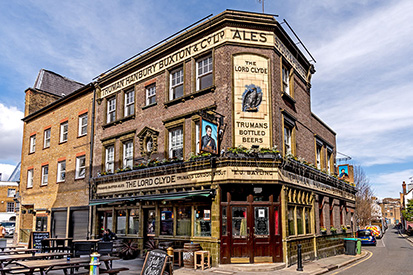
If you're in London, I highly suggest the LFB Museum behind the Lambeth Station and The Lord Clyde built in 1913 near the Southwark Station (the original headquarters and drill school). Over the years, generations of Brigade members have crossed the front door.

 
Back
Top