
You are using an out of date browser. It may not display this or other websites correctly.
You should upgrade or use an alternative browser.
You should upgrade or use an alternative browser.
TACTICAL USE OF FIRE HYDRANTS.
- Thread starter 68jk09
- Start date
- Joined
- Jan 15, 2025
- Messages
- 366
The answer for blocked or encroached upon hydrants, is NYPD enforcement using the tow away program? Should the 10-75 include the response of NYPD tow away tow trucks? In true emergency situations, ie. people trapped or rapidly extending fire, push the car away from the hydrant with a rig. The Law is in our favor! Captain Bob Rainey FDNY Engine 26 retired.
Last edited:

- Joined
- May 6, 2010
- Messages
- 17,998

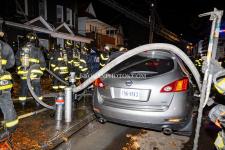
01/24/26 - Queens Village All-Hands - firstonscenephotos
Fire in a private dwelling at 94-32 221st Street

- Joined
- Apr 23, 2018
- Messages
- 1,261
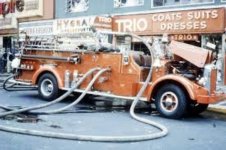
Hi Boss, if you think about it, why should we even be worried about a parked car on the hydrant?...The 35' yellow supply line was added to engines in the late 80's to resolve this issue. In addition, 3 ½” hose – Standard 50-foot lengths of 3 ½” hose can be used to hook up to a hydrant through the use of a specialized hydrant connection fitting (4 ½” to 3” double female). There is no limit on the number of lengths that can be used, so this option allows for the greatest flexibility...let the PD worry about the parked car, that's there job.The answer for blocked or encroached upon hydrants, is NYPD enforcement using the tow away program? Should the 10-75 include the response of NYPD tow away tow trucks? In true emergency situations, ie. people trapped or rapidly extending fire, push the car away from the hydrant with a rig. The Law is in our favor! Captain Bob Rainey FDNY Engine 26 retired.
What about when the Engine can’t get close enough to the hydrant / curb because of ILLEGALLY parked cars and ends up blocking out the truck company who now can’t get into position IFO the Fire building. I know you can bring a truck company in from the other direction but that’s only if the street is accessible from both ends. So yes the ECC has options with regard to hooking up and getting a positive water source but what about the rest of the equation ?Hi Boss, if you think about it, why should we even be worried about a parked car on the hydrant?...The 35' yellow supply line was added to engines in the late 80's to resolve this issue. In addition, 3 ½” hose – Standard 50-foot lengths of 3 ½” hose can be used to hook up to a hydrant through the use of a specialized hydrant connection fitting (4 ½” to 3” double female). There is no limit on the number of lengths that can be used, so this option allows for the greatest flexibility...let the PD worry about the parked car, that's there job.
- Joined
- Jan 15, 2025
- Messages
- 366
Johnny and my other brothers make a good point. The problem with using 3 1/2" and other soft clad supply hose/s is that if the pressure in the intake of the pumper drops, because of low hydrant pressure, trying to pump out more water than is being supplied, problems with the pump,, then the pressure within the supply lie drops and the hose can collapse in on its self, further reducing the water being supplied. This is why "Hard Suctions" have either a coil spring embedded, OR ribs/ridges in place to keep the suction from collapsing under negative pressure, (This includes drafting water). There was a time the FDNY Book of Regulations, required the use of hard suctions by all Engine Companies, other than the 1st. or 2nd due Engine on the 1st. Alarm. Hard suctions are a bitch to use but may be needed especially at suppling water at large fires.
Captain Bob Rainey FDNY Engine 26 "Known at the only MPO who ever Slowed down 'Rapid water" A STORY FOR ANOTHER TIME.
Captain Bob Rainey FDNY Engine 26 "Known at the only MPO who ever Slowed down 'Rapid water" A STORY FOR ANOTHER TIME.
Having read and participated in this thread I just want to say I really enjoy the photographic examples posted and more importantly I am Impressed by the multitude of solutions proposed by the participants of the thread.
Additionally, I look forward to hearing from Captain Rainey regarding being "Known as the only MPO who ever slowed down Rapid Water. Im sure the story will be entertaining and educational at the same time.
Additionally, I look forward to hearing from Captain Rainey regarding being "Known as the only MPO who ever slowed down Rapid Water. Im sure the story will be entertaining and educational at the same time.
- Joined
- Apr 23, 2018
- Messages
- 1,261
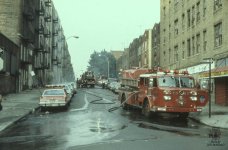
The engine apparatus should be positioned as close to the fire building as possible to reduce the time, effort and number of lengths needed for the stretch. However, consideration must be given to ladder company response and the engine apparatus should be positioned so that it will not interfere with ladder company positioning. (OPTIONS: The engine apparatus can be positioned to hook up to a hydrant either past the fire building, or before reaching the fire building.)What about when the Engine can’t get close enough to the hydrant / curb because of ILLEGALLY parked cars and ends up blocking out the truck company who now can’t get into position IFO the Fire building. I know you can bring a truck company in from the other direction but that’s only if the street is accessible from both ends. So yes the ECC has options with regard to hooking up and getting a positive water source but what about the rest of the equation ?
OR..Signal 10-70 after Urgent call to Boro dispatcher: Signifies that a water relay is required because the first-arriving engine company has no positive water source. This critical radio code informs the command that additional engines are needed to establish a water supply, often designating the second-due engine as the water resource unit...Let PD worry about the illegally parked car.
**(Before I was a truckie, I was the B/U ECC of E 88 for 4 years).
Last edited:
- Joined
- Apr 23, 2018
- Messages
- 1,261
FDNY PUMPERS generally pump to only 2 handlines for that reason. When supplying a large calibre stream or providing water to a tower ladder they should be the only source alleviating the negative hydrant pressure. A third line should only be used only in Emergency Conditions AND with confirmed water supply.Johnny and my other brothers make a good point. The problem with using 3 1/2" and other soft clad supply hose/s is that if the pressure in the intake of the pumper drops, because of low hydrant pressure, trying to pump out more water than is being supplied, problems with the pump,, then the pressure within the supply lie drops and the hose can collapse in on its self, further reducing the water being supplied. This is why "Hard Suctions" have either a coil spring embedded, OR ribs/ridges in place to keep the suction from collapsing under negative pressure, (This includes drafting water). There was a time the FDNY Book of Regulations, required the use of hard suctions by all Engine Companies, other than the 1st. or 2nd due Engine on the 1st. Alarm. Hard suctions are a bitch to use but may be needed especially at suppling water at large fires.
Captain Bob Rainey FDNY Engine 26 "Known at the only MPO who ever Slowed down 'Rapid water" A STORY FOR ANOTHER TIME.
- Joined
- Jan 15, 2025
- Messages
- 366
Johnny is right. But in my years of firefighting alot of it in the Busy "War Years" there have been times when, especially in the summertime, when kids opening hydrants to cool off, the hydrant pressure can drop to the point, that little or no hydrant pressure is available. When the gauge on the intake of the pump is too low any soft or "semirigid" hydrant connection collapses and a problem of real urgency develops. This can also happen at large fires where multiple pumpers are taking water from the same water main, notably when the water main size is smaller. I saw this happen in both Brooklyn and Staten Island at major fires in the more remote areas of NYC. that have small water mains. As I said above this is why FDNY regulations and Firefighter Procedures - Engine Co. Operations, designate when a supply connection should be through a Hard Suction, when fire or water main conditions require it. This can be somewhat dealt with FDNY signal 10-70 procedures = relaying water from unit to unit.
Captain Bob Rainey FDNY Engine 26 retired
Captain Bob Rainey FDNY Engine 26 retired
- Joined
- May 6, 2010
- Messages
- 17,998
One important thing to keep in mind regarding the "only 2 Line's off a Pumper" thing that was preached in ECC School is in an Emergency what are the first 2 lines actually doing ? are they aggressively operating or advancing on a serious body of Fire or is the Line shut down while walls / ceilings are being opened or is the Line being used for overhaul wash down ?......there have to be priorities evaluated on the spot if a 3rd Line is suddenly needed......yrs ago after a somewhat close call w/a Fire CPT cut off in an apt. at a Third Alarm while i was ADC i had sent an ENG to get another Line & the ECC of the Rig they went to Stretch off balked saying ''he had 2 Lines off already".....another (Senior) MPO nearby told him in no uncertain terms that the Line was needed & WAS going to be supplied.....after the Fire when i spoke to the Unit stretching about what i thought was a delay they told me about the exchange with the ECC....when i spoke to him he was adamant about being right as he was abiding by what he was told in ECC School. .....after i asked him didn't he see that the 1st 2 Lines were not flowing water at that point ? ( both Lines were in the original Fire Store (a Furniture Store ) where the Fire was knocked down & the CPT had been operating above when extending Fire from the walls cut him off ).....the ECC just fell back on the ECC School edict.....i submitted a Report requesting that some more in depth explanation be included in the ECC School curriculum.....this was in 2008 i RET in 2009 by that point nothing had changed ....i dont know about what is taught on this in 2026 ?
- Joined
- Jan 15, 2025
- Messages
- 366
I have been at many FDNY fires where more than 2 handlines were stretched off one rig. The problem is if something happens to a rig with multiple lines operating off its discharges; all those lines can lose water, a very dangerous situation. DON'T PUT ALL YOUR EGGS IN ONE BASKET.
I was trained as an M.P.O./E.C.C. when the FDNY had "Rapid Water"= a Polymer added to the water to reduce fiction loss and increase GPM of hoseline/s in operation. If any line was shut down at the nozzle the "Rapid Water" % at the nozzle of any line still operating went too high, causing very slippery conditions = Too much Rapid Water Polymer. But FDNY has not used "Rapid Water" for many years now. More important now is if too many multiple hoselines are operating you can "Run Away" from the amount of water, the water mains, in certain areas of NYC can supply. 2,000 GPM Pumpers can help but if you can get only 900 GPM out of suppling Hydrant due to low water pressure in the water mains the supplied hoselines will suffer. This can be a real problem in the Summer when kids open fire hydrants to cool off in very hot weather.
Captain Bob Rainey FDNY Engine 26 retired
I was trained as an M.P.O./E.C.C. when the FDNY had "Rapid Water"= a Polymer added to the water to reduce fiction loss and increase GPM of hoseline/s in operation. If any line was shut down at the nozzle the "Rapid Water" % at the nozzle of any line still operating went too high, causing very slippery conditions = Too much Rapid Water Polymer. But FDNY has not used "Rapid Water" for many years now. More important now is if too many multiple hoselines are operating you can "Run Away" from the amount of water, the water mains, in certain areas of NYC can supply. 2,000 GPM Pumpers can help but if you can get only 900 GPM out of suppling Hydrant due to low water pressure in the water mains the supplied hoselines will suffer. This can be a real problem in the Summer when kids open fire hydrants to cool off in very hot weather.
Captain Bob Rainey FDNY Engine 26 retired
Attachments
- Joined
- May 6, 2010
- Messages
- 17,998

06/03/26 - Jamaica All-Hands - firstonscenephotos
Fire in a private dwelling at 139-34 88th Avenue